If your Apex home already has good bones, the right design updates can help it stand out without turning your pre-listing plan into a full renovation. In a market where buyers are comparing presentation, condition, and price closely, small visual choices can shape first impressions online and in person. The good news is that you do not need to chase every trend to make your home feel current. You just need a smart, resale-focused plan. Let’s dive in.
Why presentation matters in Apex
Apex continues to grow, with the Town of Apex estimating 85,192 residents as of March 31, 2026 and noting steady population growth over the past five years. The town also points to its location near Research Triangle Park and Raleigh as part of its ongoing appeal. That growth helps keep buyer interest strong, but it also means your listing needs to feel polished from the start.
Current market conditions reinforce that point. In January 2026, Realtor.com reported Apex market activity showing 643 homes for sale, a $595,000 median listing price, 76 median days on market, and a 98% sales-to-list price ratio. Redfin also reported a $623,000 median sale price in February 2026, up 4.3% year over year, which suggests buyers are still paying attention to well-positioned homes.
There is also wide variation within Apex. Realtor.com shows different pricing patterns by ZIP code, including roughly $525,000 in 27502 and about $744,510 in 27523. That is why your update strategy should match your price point, location, and likely buyer expectations rather than follow a one-size-fits-all checklist.
Keep Apex style timeless
Apex has a strong historic identity, especially near downtown. The town’s Small Town Character and Historic Property guidance exists to preserve the traditional feel of downtown and nearby residential areas, where many buildings date back to the late 1800s. Even outside those areas, that local character influences what feels right to buyers.
In practical terms, clean, classic, and well-maintained usually reads better than bold, highly personalized design. Timeless finishes, simple color palettes, and thoughtful curb appeal tend to feel more persuasive than trend-heavy choices that could look dated quickly. If your home is in or near a historic or overlay area, compatibility matters even more.
Start with paint first
If you are deciding where to spend first, paint is usually the clearest answer. According to the National Association of Realtors consumer guide for sellers, agents most often recommend painting the entire home or painting one room before listing. NAR also notes that cleaning walls, windows, carpets, and lighting fixtures can improve how a home looks in both photos and showings.
Fresh paint helps your home feel brighter, cleaner, and more move-in ready. It also creates a more cohesive backdrop for photography, which matters because buyers often form their first opinion online. If your walls are scuffed, overly dark, or painted in very personal shades, repainting can be one of the most cost-effective updates you make.
Best paint choices for resale
The most resale-friendly approach is a neutral base with one or two current-feeling choices in the right rooms. Zillow’s paint color research found that buyers responded well to a muted green kitchen, a navy blue bedroom, and a dark gray living room. At the same time, some brighter colors performed worse.
That does not mean every Apex seller should add bold color. It means a carefully chosen accent room can feel intentional and up to date, while the rest of the home stays light, calm, and broadly appealing. In many homes, soft whites, warm greiges, and muted earthy tones provide the best base for resale.
Update lighting and hardware
Dated fixtures can make an otherwise solid home feel older than it is. Zillow’s 2026 home trends report says buyers are increasingly drawn to layered ambient lighting, while HGTV trend coverage cited in the research points to continued interest in matte black hardware and finishes. For sellers, that creates a simple opportunity.
Swapping in updated ceiling fixtures, replacing worn vanity lights, and coordinating cabinet hardware can make kitchens, baths, and entry spaces feel more intentional. You do not need to over-design the house. You just want the finishes to feel consistent rather than random.
Where small swaps go far
Focus on the rooms buyers notice first:
- Entry and foyer lighting
- Dining room fixture
- Kitchen pendants or flush mounts
- Bathroom vanity lights
- Cabinet pulls and knobs in kitchens and baths
When possible, stick with one or two finish families throughout the home. That visual consistency helps the house feel more finished, even if the updates themselves are modest.
Refresh the exterior for first impressions
Curb appeal matters in every market, but it is especially important in Apex, where traditional character is part of the draw. NAR’s seller guidance highlights landscaping, the front entrance, and paint as key ways to improve a home’s appearance before listing. Those are also the areas buyers notice first in listing photos.
A clean front walk, trimmed foundation plantings, fresh mulch, and a tidy porch can instantly improve the way your home reads online. If exterior paint or trim looks tired, even targeted touch-ups can make a difference. The goal is not to make the house flashy. The goal is to make it look cared for.
Front door color matters
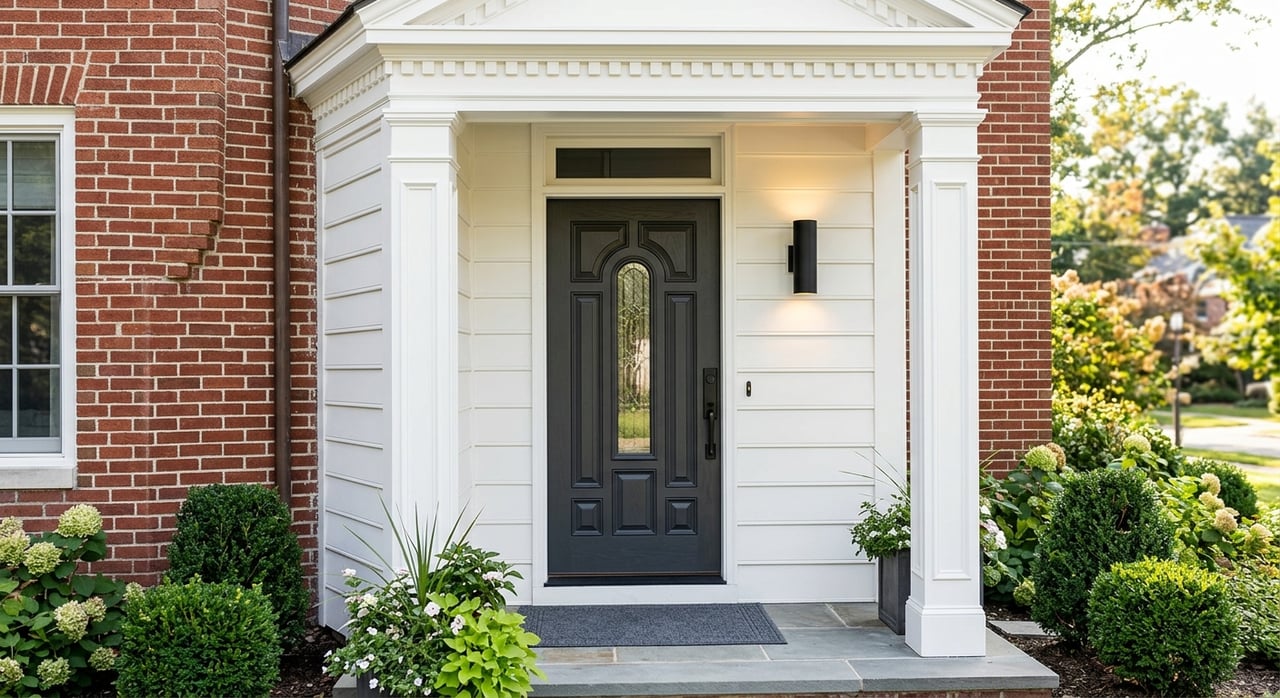
According to Zillow’s front door color research, a black front door was associated with the highest resale price among tested colors, while white and chalky blue increased tour interest. Less favorable colors in that study included cement gray, bright red, saturated blue, and olive green.
For many Apex homes, especially those with brick, painted siding, or a more traditional exterior, black remains a safe and polished choice. It feels classic, photographs well, and pairs easily with updated hardware, porch lighting, and landscaping.
Use staging to finish the story
Even a nicely updated home may still need staging to reach its full potential. The NAR 2025 Profile of Home Staging found that 83% of buyers’ agents said staging made it easier for buyers to visualize the property as a future home. The most commonly staged rooms were the living room, primary bedroom, and dining room.
That matters because those rooms often carry the emotional story of the listing. They help buyers picture daily life in the home, not just the square footage. If your home is vacant, cluttered, or furnished in a way that hides scale and function, staging can help bridge that gap.
Prioritize these staged spaces
If you want the best return on staging effort, start here:
- Living room for first visual impact and flow
- Primary bedroom for comfort and scale
- Dining room for lifestyle and entertaining cues
In many cases, a light refresh paired with strategic staging is more effective than spending heavily on major renovations.
What to prioritize before listing
Not every project deserves your time or money. NAR’s 2025 Remodeling Impact Report notes that buyers are less willing to compromise on condition than they were in the past, which helps explain why small visible flaws can matter. The same report also shows that the projects most often recommended before listing are usually modest, not major whole-home remodels.
If you want to stay focused, prioritize the updates buyers notice immediately:
- Fresh interior paint
- Updated lighting and hardware
- Front entry improvements
- Landscaping and exterior touch-ups
- Staging key rooms
- Deep cleaning and decluttering
These are the updates that help your home photograph better, show better, and feel better cared for.
What to avoid overdoing
It is easy to assume a big renovation will always bring the biggest payoff, but the research does not support that as a universal rule. In many cases, visible cosmetic work and exterior-focused improvements are the more strategic choice before listing. That is especially true if your current finishes are functional and your timeline is tight.
You also want to avoid updating beyond your submarket. A home in one part of Apex may benefit from a restrained refresh, while a higher-priced pocket may support more finish detail. The smartest plan is one that fits your home, your competition, and your expected price range.
When vendor help makes sense
Some seller updates are DIY-friendly, especially painting and light cosmetic work. NAR’s remodeling data shows many owners either do projects themselves or mix DIY with hired labor. But once multiple rooms, trades, or deadlines are involved, vendor coordination becomes much more valuable.
This is often where sellers save the most stress. If you need painters, handymen, landscapers, cleaners, and a stager to move in the same direction on a short timeline, a managed plan can keep the work focused and consistent. That is also how you avoid spending in the wrong places.
A design-forward listing strategy should not mean over-improving. It should mean choosing updates that support your sale price, fit the character of your Apex neighborhood, and help buyers connect with your home quickly. If you want a clear plan for what to update, what to skip, and where vendor help will actually move the needle, Jody Doran can help you prepare your home with a thoughtful, market-smart approach.
FAQs
What design updates help an Apex home sell faster?
- The most effective updates are usually fresh paint, updated lighting and hardware, front entry improvements, landscaping, deep cleaning, and staging in key rooms.
What paint colors are best for selling a home in Apex?
- A neutral base is usually the safest choice, with carefully selected colors like muted green in a kitchen or navy in a bedroom used only where they add a current but timeless feel.
Does staging really matter when selling a home in Apex?
- Yes. NAR found that 83% of buyers’ agents said staging helps buyers visualize a home, especially in the living room, primary bedroom, and dining room.
Should you remodel before selling a house in Apex?
- Usually, modest cosmetic updates are the better first move. Major remodels are not always necessary, and the best pre-listing plan depends on your home’s condition, price point, and location.
How do you choose updates for a historic or traditional Apex area?
- Focus on classic, neighborhood-appropriate improvements such as simple finishes, restrained colors, clean landscaping, and a polished front entry rather than highly trendy design choices.
